The barn wakes before the sun. Unguis shift on bed linens, a mare sighs into the quiet, swallows telephone call from the treeline. You enter that hush, lungs loaded with the cool of hay and earth, and what you lug from the week loosens a notch. Horses have a method of asking us to arrive as we are, after that fulfill us in the here and now. Conscious mornings include that meeting.
I have actually led hundreds of sessions in this window in between first light and the day's noise. I have viewed a chief executive officer stop mid-sentence since a gelding tipped an ear towards her heart rate. I have actually stood with a teenager who thought stillness was impossible and felt his breathing loss in with a mare called Peaches. I have learned that equine-facilitated wellness lives carefully: where you stand, just how a lead rope lays throughout your palm, when to go back so an equine can answer the inquiry you have not yet asked.
Why mornings matter
Horses are crepuscular by nature, most alert at dawn and dusk. The barn at breakfast brings a rhythm that supports conscious job. You are not combating summertime heat or mid-day wind. The day's deliveries have not shown up. Flight animals read our internal weather condition with shocking accuracy, and quiet settings assist us regulate so we can satisfy them clearly.
There is also a practical layer. In equine-assisted solutions, safety and success depend on discerning arousal states. Very early hours often tend to be a lot more foreseeable: fewer tractors, fewer visitors, fewer variables. For individuals sensitive to sound or light, that can make all the distinction. When I develop equine-assisted tasks for an autism equine discovering program or ADHD equine finding out support, mornings set a foundation that is calmer and even more forgiving.
A barn-centered mindfulness you can feel
This is not reflection eliminated from the globe. It is mindfulness with hay dirt on your sleeves. Steeds bring instant psychophysiological feedback to our refined shifts. Prey animals scan for power movements, and they respond truthfully. If I hold my breath, a steed will often lift a head and time out. If I soften my shoulders, that same horse might lick, eat, or sigh. Gradually, individuals learn a language that runs deeper than words.
A normal conscious early morning mixes silent monitoring, brushing, somatic recognition, and sometimes installed job, depending on the program and goals. In healing horsemanship we usually stay on the ground, specifically when somatic healing with equines is the emphasis. If riding is appropriate, we present it in such a way that keeps the nerves inside a window of tolerance.
The arc of an early morning session
I like to provide people a shape to prepare for. The arc varies by person, but this structure serves most.
We get here, stop, and orient. I ask customers to notice three information they did not catch in the first glance. Occasionally it is the cooler air near the tack area floor. Sometimes it is the way a mare's eyelids flutter when sparrows sweep. This task is not unimportant. Orientation anchors awareness in the here and now.
Then we fulfill the equine. I do not rush the intro. Equine-facilitated coaching is relational, not transactional. An excellent suit make up dimension, movement top quality, history, and herd function. For anxiousness support with horses, I commonly select geldings that track energy without intensifying. For sensory challenges, I prefer equines with constant limits, soft eyes, and person curiosity.
Grooming comes next. It looks easy, but the brush is an adjusting fork. Lengthy strokes demand cadence. Round movement with a curry comb requests regular stress. Embolisms of winter season layer or summer dust end up being sensory input that a client finds out to quality and modest. This is where experiential understanding with equines beams, since the horse provides responses without judgment. If strokes are too fast, a swish of the tail claims so. If strokes are even and grounded, a hip softens and the horse actions closer.
After that, we relocate. Often it is hand-walking in a small sector, occasionally freedom in a rounded pen, often stopping at a fencing line to exercise breath. Installed job, when picked, is quiet: a few mins at a stroll, interest on the seat and the equine's tramps. I rarely exceed 15 to 20 mins of installed time in a wellness session that runs an hour. The objective is policy and connection, not mileage.
We close with gratitude and assimilation. I ask what stood out, where in the body something altered, and what that suggests for the remainder of the day. People are frequently amazed by how concrete their takeaways end up being. They entrust one physical hint that functioned and one small method to try at home.
An easy early morning checklist for clients
- Wear closed-toe shoes and layers you can lose as the day warms. Skip solid scents, they can trouble horses and other clients. Eat something light, secure blood sugar supports regulation. Bring water and any kind of adaptive equipment reviewed with your practitioner. Arrive a few minutes early to allow your system get used to the barn.
The somatic reference of horses
I keep a psychological reference, built over years of enjoying. These signs are not routine, yet valuable:
A lick and eat after a pause can show a shift from thoughtful activation to parasympathetic settling. Not constantly, in some cases it is remaining hay, so check context.
A lowered head and softened blink rate often suggest relaxation. Once again, watch for other signals. A decreased head with pinned ears is not relaxation.
Ears that tip toward you when you exhale can be the steed picking up your breath rhythm. I typically have customers count the beats of their own breathing and see if the steed's ear angle changes.
An equine choosing to stand near you without stress on a lead opens discussion. Closeness is not always approval, yet it is info. We treat it with respect.
We do not appoint magical meaning to these signals. We build patterns over sessions. That is the heart of equine-facilitated wellness, noticing the body talk between 2 varieties and discovering to chat ethically.
Practices that secure a mindful morning
The job moves best in tiny, repeatable practices. Right here are a couple of that have actually served many clients.
Breath coupling at the rail. Stand along the field rail with a hand light on the lead rope, or without rope if you are working at liberty. Inhale via the nose for the count that matches you, usually four. Exhale slightly much longer. Do that 3 to 5 cycles while watching the horse's ears and chest. The task is not to make the equine breathe with you, yet to see whether your breath transforms the room in between you.
Grooming tempo. Pick one quadrant of the horse and work there for three minutes. Move the brush at a rate you can keep without stress. Allow the stroke size match your out-breath. Most people start too quick. Slowing down to the point that your shoulders decrease is the secret. The steed will commonly tell you when you land it. I have enjoyed hips drift towards a client as if to claim, keep doing exactly that.
Lead rope recognition. Hold the rope like you would a ripe peach you do not intend to bruise. Fingers around, hand relaxed, elbow joint soft. Walk a little figure at a speed that allows you to feel the horse's front feet. The habit of tugging or clamping is difficult to see till the rope informs on you. When stress rises, pause. Take one breath. Begin again with less.
The pause and offer. This is my favored in group structure with equines and equine-assisted coaching. You provide a low, clear request, such as welcoming the horse to tip with you over a ground pole. After that you wait. If the equine waits, you see what else remains in the ask. Is your body somewhat shut? Are you considering the pole like a hazard? Adjust yourself first, then offer once more. In teams, this mirrors how vague goals and mixed signals slow jobs. The equine offers instant, neutral feedback that individuals can transfer back to their roles.
A step-by-step halter breathing exercise
- Stand at the equine's shoulder, one hand on the level of the halter, fingers loose. Feel your feet in the dust, knees soft, jaw unclenched, eyes open. Breathe in for four matters, take a breath out for 6, repeat for six breaths. Let your hand soften with the out-breath, then delicately launch the halter and go back one pace.
Most individuals feel something change by the fourth or 5th breath. Occasionally it is as small as your shoulders going down a quarter inch. Occasionally the horse's head descends a couple of inches and the eye softens. When it does not, that is info as well. You may be holding an assumed like a hand. You might require to readjust setting. The method is finding out to eavesdrop the ideal channels.
Stories that stick
Eli was 14, intense, funny, and for life in motion. ADHD made classrooms a grind. At the barn, he could not stall longer than 2 seconds on day one. Peaches, a Haflinger with a mop of forelock, watched him bounce and pawed as soon as. I asked him to match Peaches' feet for ten actions. He rolled his eyes and attempted to sprint onward. Peaches stayed. He looked back at me. I claimed, notice her feet. He attempted again, slower this time. Ten actions took a min. On the 3rd lap, his arms stopped flapping. His mother wept. In 5 sessions, he found out to carry the metronome of Peaches' walk right into college mornings. We called it his barn cadence. It was not a treatment. It was a device he owned.
Mae came for anxiety assistance with steeds after a harsh year of panic attacks. We started at the rail. Her breath was high in her upper body and quickly. I asked her to count sparrow telephone calls before each exhale. Sparrows make impossible metronomes, so she needed to pay attention rather than predict. The mare in the field drifted better on her very own. Mae's exhale lengthened. She stated it felt like a door she had hugged for too long squeaked open. 3 months later she still kept a tiny bird recording on her phone for limited days, a tip of what worked.
On a gusty Tuesday, a tech startup came for group building with horses. They were quick in their heads and unequal in their bodies. We established three easy challenges and asked to relocate a horse via without touching the pet. They loaded ideas on ideas, talking over each other. The gelding flipped his ear and roamed to a weed spot. I requested one person to hold the vision, one to view breath, and one to discover the horse's feet. The rest were to stall and take a breath. It took them 9 minutes to obtain quiet. Then the horse walked the program with dignity. The team lead later on stated the workout made their daily standups much shorter by fifty percent, since they found out just how much static they include when they all talk at once.
When equine-assisted job supports sensory needs
Barns are sensory rich. Not everyone satisfies that splendor in the same way. For different therapy for sensory obstacles, I design sessions with foreseeable patterns and clear boundaries. Right here is what aids:
Space. A 10 by 20 meter sector with good footing and very little clutter. Sensory seekers frequently wish to touch every item, so fewer items keeps options simple.
Sound scaffolding. Mornings are quieter, however I still lower noise. No loud music, restricted machinery. If ear defenders assist a customer, we utilize them during the first few sessions, after that taper as appropriate.
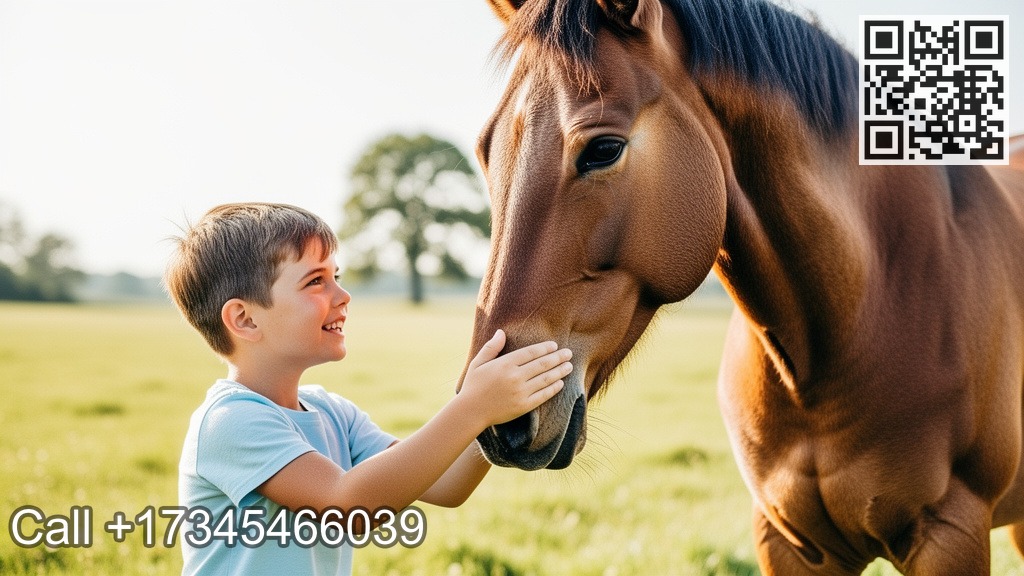
Touch windows. Some customers like deep pressure and take advantage of brushing terminals with weighted brushes. Others favor light touch and do much better with long-handled tools and more distance. We build a food selection and allow the equine's resistance lead.
Clear signals. Equines appreciate clarity. So do several neurodivergent people. I make use of straightforward gestures, repeatable steps, and visual supports if beneficial. The steed's reaction reinforces the clarity.
For autism equine learning programs, ground rules keep every person safe and certain. We pre-teach the distinction between a friendly zone near a shoulder and a red area behind a hip. We exercise where to stand and how to relocate away. We reward little moments of mutual attention, and we make room for stimming that does not stun the herd.
Choosing the best method and provider
Not all barns, horses, or professionals are alike. You might encounter therapeutic horsemanship, equine-assisted coaching, or more comprehensive equine-assisted services. They overlap, but the training backgrounds and intended outcomes can differ. Restorative horsemanship has a tendency to stress horsemanship skills with flexible methods. Equine-facilitated training focuses on individual or specialist growth, often for groups or leaders. Somatic healing with steeds emphasizes body-based understanding and nerves policy instead of riding achievement.
Ask regarding horse welfare. Healthy and balanced programs focus the steed's consent. Expect time limits that safeguard equine mental tons, tack that fits, and sessions that permit horses to opt out or rest.
Ask concerning specialist credentials. Search for training in equine actions and human facilitation. If mental wellness is an emphasis, ask about licensure and guidance. If learning support is the objective, try https://www.hhooves.com/sproutlingssensoryadventures to find suppliers experienced in ADHD equine learning support or autism program design.
Ask about safety and security strategies. Good suppliers talk honestly concerning risk, weather condition terminations, and emergency situation procedures. They will certainly request health and wellness backgrounds and review contraindications. As an example, unmanaged seizures, certain bone and joint injuries, and serious allergic reactions may restrict choices or require medical clearance.
Trade-offs and side cases
Morning dew makes footing slick. We choose sectors with sand or well-drained screenings and test the surface area prior to leading a steed in. Cold mornings can make equines fresh. On those days I integrate in longer warmups, movement for the horse prior to customer arrival, and much more range till power settles.
Wind modifications every little thing. A tarp that lay silent the other day might chatter today. Some customers discover wind dysregulating. I have canceled liberty work and switched to stall-side pet grooming instead of press through. The right selection typically resembles doing less, not more.
Mounted job is not a reward and ground work is not a consolation. For customers with active pelvic pain, stressful injury, or high arousal, remaining on the ground is better. For others, the rhythm of a stroll can be managing. I operate in short segments and examine breath and speech routinely. If someone begins answering in fast, clipped sentences, we stop and go back to the rail.
How progress shows up
A typical mistake is to look only for significant moments. Progression frequently looks like small, repeatable success. A client who can not go into the field last month currently stands at eviction with stable breath for 90 seconds. A steed who made use of to pin ears at quick movements currently maintains an ear soft when somebody screws up with a brush. A group that took 20 mins to align takes eight.
Four to eight sessions frequently disclose patterns you can rely on, yet there is no magic number. Some people come for a focused ruptured around a specific objective, like relieving Sunday evening dread with a Monday morning barn routine. Others fold the barn right into a much longer arc of treatment or coaching. The secret is fit and connection. You want a program that pays attention and adapts.
An instance morning circulation that works
I will illustration the shape of a 75 minute session I utilize often. Times flex by a few minutes.
Arrival and alignment, 10 minutes. We breathe at the fence, name 3 sensory supports, and established a straightforward objective. Something like, I want to find one breath that really feels easier.
Horse intro and choice, 10 mins. If the program permits choice, the customer observes two steeds and tells me what they discover. I secure horses from overhandling by managing gates and room, but I pay attention to client impressions.
Grooming for guideline, 20 mins. We concentrate on one side, after that the other, staying with pace. If brushing boosts arousal, we transform tool or button to hand touch with clear start and quit signals. Horses get breaks.
Movement, 20 minutes. Hand-walk in figures, barrier work, or mounted stroll if appropriate. I view feet, breath, and face tension more than outcome. If the equine seeks to the outdoors typically, I shift position or reduce the pace.
Integration and close, 15 minutes. We name one body hint that functioned and one barn photo to perform. We thank the steed. We record an easy practice for home, like three long exhales at the cooking area sink prior to coffee.
Where teams satisfy themselves
Equine-facilitated training with teams can be powerful, especially in the early morning when interest is tidy. I maintain exercises low technology and high responses. One preferred asks a group to move a loose horse through a U-shaped alley of poles using only their settings and breath. The policy is no touching and very little speaking. You find out rapidly who occupies space without noticing, that withdraws under pressure, and that can hold still when the team vibrates. Steeds often tend to adhere to coherent bodies. Groups that dedicate to one clear signal move the equine. Groups that splinter enjoy the equine graze.
We debrief with specifics. Did the horse hesitate at the edge? That noticed initially? Just how did the team change? Individuals are usually shocked that things they do without thinking in the sector matches the important things that thwarts meetings. Repairing it in a barn is oddly easier. The comments shows up in actual time from a neutral teacher.
Ethics at the center
Wellness is not wellness if it costs the equine. Approval in this job looks like selection points we recognize. It looks like structured rest, yield, and a job the horse recognizes. It resembles tack that fits, normal veterinarian and hoof care, and handlers that can acknowledge discomfort. I have rescheduled sessions because a horse offered stiff or sour. The dissatisfaction in the moment safeguards trust over time.
On the human side, we ask for informed approval and revisit it as we go. Customers must recognize what to anticipate, what risks exist, and what options are available. Equine-assisted activities complement, they do not replace, suitable medical or psychological healthcare when needed. Good programs develop bridges, not silos.
Getting began without overcomplicating it
If you are brand-new to this, you do not require to have ideal horsemanship or elegant gear. You need comfy garments, a willing spirit, and a specialist who treats you and the steed with respect. Try a short series in the early morning with clear objectives. Notice how you really feel when you leave the barn and once again 2 hours later on. If rest improves, if conferences really feel a hair simpler, if your shoulders keep in mind how to drop on command, you get on the best path.
For some, equine-assisted solutions end up being a seasonal practice. Springtime and loss mornings hold specific magic. For others, one intensive weekend of equine-facilitated training with their group unlocks patterns that move society back at the office. For families looking for choice treatment for sensory challenges, a summertime of foreseeable Saturday mornings can change the baseline for the college year.
The barn is a classroom where progress does not announce itself with trumpets. It gets here in the silent. A gelding's ear leans right into your breath. Your hand steadies on a halter. The day stretches ahead, and you locate you have more room inside it. That is the gift of conscious mornings with horses, easy and generous, all set at dawn.
Happy Hooves Wellness
9177 Gross Rd, Dexter, MI 48130
+17345466039
https://www.hhooves.com/